Port of Rotterdam, Germany further partnership for Australia green hydrogen hub
The Port of Rotterdam Authority, Germany’s Fraunhofer Institute for
Solar Energy Systems (ISE), and the Australian government have teamed up to
develop a joint hydrogen hub in Western Australia.
The initiative is in line with the Port of Rotterdam’s ambition to become a
hydrogen hub for Northwest Europe.
The TrHyHub project aims to build a modern port industrial complex for
large-scale hydrogen production for both local use and export.
Around 20 companies from the three countries have indicated their intention
to take part.
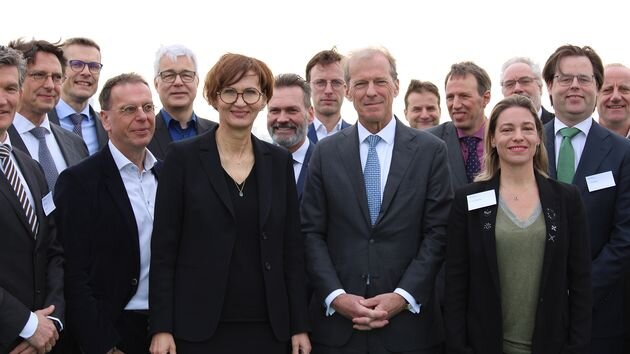
The partnership was announced during the German Minister for Research and
Education’s visit to the port of Rotterdam on 13 February, where the Port of
Rotterdam Authority and Fraunhofer confirmed their intention for further
partnership.
The parties involved are committed to combining their technology,
knowledge, and expertise to develop the Australian hydrogen hub and supply chain
to the German hinterland.
As part of the new port, they will be exploring the possibility for the
joint construction of an offshore export terminal to enable faster hydrogen
exports to Northwest Europe.
The Dutch and Australian ministers for Climate and Energy had already
signed a partnership agreement in this area earlier this year.
Both governments have stated their ambition to cooperate in four areas,
including hydrogen trade policy, standards, and certification; port
infrastructure and the development of supply chains; innovative hydrogen
technology, including transport by vessel; and government policy for safety,
training, regulations, and social support for hydrogen.
The partnership also looks to enhance the sustainability of the energy
supplies for Germany and the Netherlands and accelerate the replacement of coal
and oil imports with green hydrogen, reducing their dependency on Russia.
According to the partners’ recent release, the Oakajee Strategic Industrial
Area (SIA), where the joint hydrogen hub will be developed, has the potential to
become one of the world’s largest hydrogen-producing areas due to its optimal
wind and solar power generation conditions.
Last month, the Port of Rotterdam joined forces with STC International to
organise the port energy transition management programme.