
Indonesia has Potential to Lead in Shipping’s Energy Transition
As the shipping industry looks for future sources of alternative fuels and
emerging nations look to the opportunities being created by the new fuel
industry, a new report suggests that Indonesia has the opportunity to take a
leadership role. Published by the P4G-Getting to Zero Coalition Partnership, the
report finds that Indonesia has several opportunities to leverage the global
transition to zero-emission marine fuels toward key national objectives.
However, achieving this will require targeted action to unlock these
opportunities.
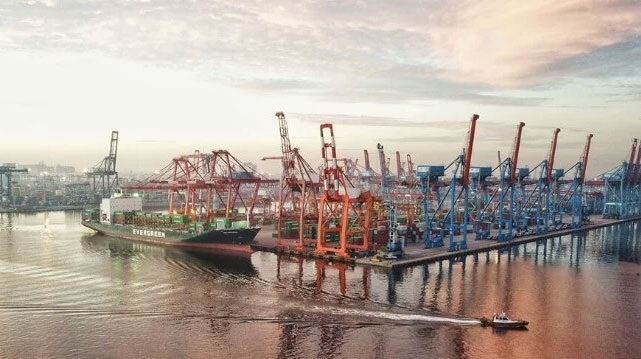
“The increasing momentum behind international maritime decarbonization
holds huge potential for countries like Indonesia,” said Ingrid Sidenvall Jegou,
Project Director at Global Maritime Forum. “To better realize this opportunity
and signal strong public buy-in, Indonesia should seek to leverage its influence
in international negotiations, particularly drawing on its role as the host of
the G20 later this year, in addition to COP27 and upcoming IMO
negotiations.”
With over 17,000 islands, GMF says that Indonesia is intrinsically tied to
the maritime industry, with many small vessels making up the domestic fleet, in
addition to a high volume of international traffic passing through Indonesian
waters. Maritime activities contribute massively to Indonesian society and the
economy, with there being a strong potential to leverage these activities to
decarbonize other industrial activities and support wider economic
development.
Traditional Indonesia’s neighbor Singapore has been the world’s leading
bunker port. Positioned on one of the major sea lanes the city-state has long
been the leader in supplying fuel to passing ships, but the report argues that
by establishing green hubs, Indonesia can cement its position as a key maritime
axis, creating new revenue streams from SZEF exports and bunkering and improving
access to import and export markets.
“Identifying strategic opportunities for renewable energy production in
emerging and developing economies, like Indonesia, is central to enabling a just
and equitable transition for international shipping,” says Margi Van Gogh, Head,
Supply Chain and Transport at the World Economic Forum. “By scaling its
renewable energy potential, Indonesia could decarbonize domestic industry and
aid the broader shipping energy transition – a pathway that could enable
Indonesia to become a leading producer and supplier of sustainable zero-emission
fuels, create new sustainable jobs, and contribute to economic growth.”
They estimate that the development of scalable zero-emission fuel
infrastructure could lead to an investment of between $3.2 to $4.5 billion by
2030. This is in addition to the potential development of other industries,
expertise, environmental protection benefits, and R&D emanating from the
decarbonization of maritime shipping and the adoption of SZEF.
After consultation with key Indonesian stakeholders, the report names three
key opportunities including the possibility of establishing Kalimantan as a
bunkering hub, the electrification of the small boat fleet, and a
decarbonization hub powered by geothermal activities.
However, the report also concludes that essential to unlocking these
opportunities is a facilitative policy and financial framework capable of
effectively motivating and convening key actors across sectors and value chains.
Presently, Indonesia benefits from its existing policy frameworks in the field
of maritime, energy and climate policy, however, more work is needed to
coordinate policies more specifically around the maritime decarbonization
opportunity.