
Wärtsilä affirms new engine minimises methane slip by 41 per cent
Wärtsilä, a technology group, has created an ultra-low emissions
version of its Wärtsilä 31DF engine that can reportedly reduce methane emissions
by 41 per cent.
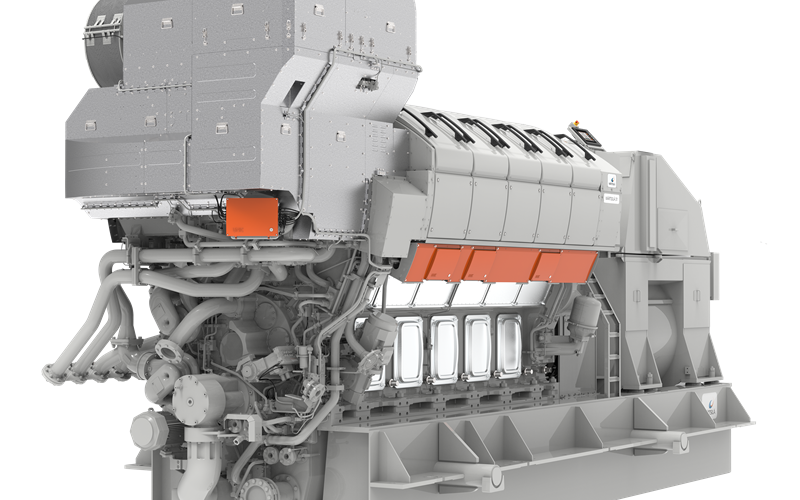
When running on LNG, this improved version may reduce methane emissions by
up to 56 per cent and nitrogen oxide (NOx) emissions by up to 86 per cent at 50
per cent load.
The new version of Wärtsilä 31DF engine , which is used on one of
Wasaline’s four engines on the Aurora Botnia ferry, has reportedly helped the
Finnish-Swedish ferry operator decrease methane emissions by 10 per cent.
As part of the EU co-funded Green Ray and SeaTech projects, Wärtsilä
piloted the ultra-low emissions concept onboard the Aurora Botnia with
reportedly good results verified through an independent study conducted in
December 2022 by VTT, the Technical Research Centre of Finland.
Encouraged by the encouraging findings, Wärtsilä has now commercialised the
new ultra-low emissions variant of the Wärtsilä 31DF engine.
This newest cooperation is part of Wärtsilä and Wasaline’s long-term
commitment to minimise emissions on the Aurora Botnia, the world’s most
ecologically efficient RoPax ferry.
Peter Ståhlberg, Managing Director of Wasaline, commented: “We are very
committed to decarbonisation, and we have worked closely with Wärtsilä to make
sustainable shipping a reality. It is a goal-oriented partnership that benefits
both companies, as well as the industry as a whole.
“We have been pleased to allow the ‘Aurora Botnia’ to be utilised as a
floating laboratory, and we are excited to see the success of this latest
Wärtsilä technology breakthrough.”
The Wärtsilä 31DF engine platform, which was introduced in 2015, already
satisfies current regulatory requirements. The new version will allow operators
to go even farther in decreasing methane emissions, helping to futureproof their
vessels against possibly stricter worldwide standards in the long run.
Furthermore, upgrading dual fuel technology to reduce methane emissions
will have a significant influence on LNG’s long-term viability as a maritime
fuel.
Stefan Nysjö, Vice President of Power Supply, Wärtsilä Marine Power, said:
“Our work around reducing methane slip and GHG emissions is part of Wärtsilä’s
effort to continuously improve efficiency and reduce emissions of our products,
and this new innovation is one more very important step along the road to
decarbonisation.
“The building of an LNG fuel infrastructure has been an important factor in
shipping’s transition towards cleaner operations, and Wärtsilä continues to
create solutions that support this journey. Our focus has always been to improve
and optimise existing solutions, and to develop exciting new ones. With this
latest introduction, we are clearly delivering on this commitment.”
Although methane slip from engines is minor in percentage terms, it is
substantially more effective than CO2 – up to 28 times more toxic.
Cutting methane emissions is one of the most effective approaches for the
shipping sector to reduce overall greenhouse gas (GHG) emissions from engines
over the next ten years, complementing other initiatives to reduce CO2
emissions.
In September, Wärtsilä announced it will supply an integrated hybrid
propulsion system for two new hybrid RoRo vessels.