
Ports of Stockholm and Riga apply for EU green funding
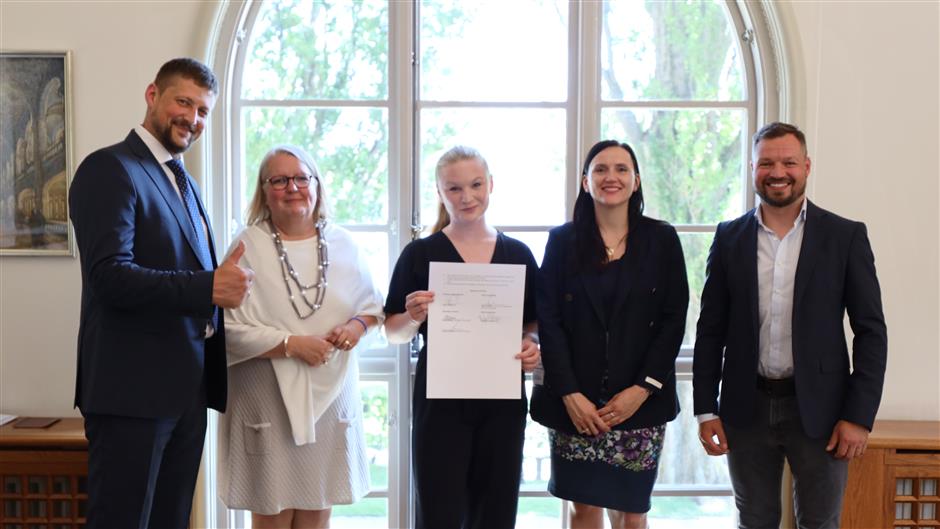
The Port of Stockholm, the Freeport of Riga Authority, and Riga
Ropax Terminal have signed a Memorandum of Understanding (MoU) to apply for
joint EU funding to reach their environmental targets.
More specifically, the ports aim to use this funding to reduce the impact
of port activities on the environment in the areas surrounding the passenger
terminals in the capital cities.
The goal is to build a sustainable foundation for the future reintroduction
of the important maritime transport route between the neighbouring countries and
to ensure climate neutrality.
The Freeport of Riga Authority and Riga Ropax Terminal are also part of the
MoU to improve connectivity between Riga and Stockholm and develop a brand new
RoPax terminal in Riga.
Historically, there has been a stable maritime daily connection between
Stockholm and the Latvian capital city, Riga.
Since 2010, services known as RoPax, carrying both passengers and goods
cargo, sailed from the Värta Terminal in Stockholm.
Prior to the COVID-19 pandemic, an average of just over 700,000 passengers
used the sea-route between Stockholm and Riga each year.
During the spring of 2020, the shipping company operating the
Riga-Stockholm route decided to suspend services due to the severe drop in
passenger numbers caused by the pandemic, which made the route unsustainable
financially.
The MoU and the future joint project also aims to fulfil the EU “Fit for
55” goal to reduce net emissions of greenhouse gases by at least 55 per cent by
the year 2030.
Ansis Zeltins, CEO of the Freeport of Riga Authority, stated: “The
development of environmentally friendly and future-oriented passenger
infrastructure, as well as the improvement of connectivity within our port, is a
key strategic goal for Freeport of Riga.”
“The signing of this Memorandum emphasizes our joint effort to address
existing and future environmental challenges, particularly in the scarce Baltic
Sea region, while promoting the development of modern port infrastructure and
building sustainable and ‘green’ passenger and freight services between our
ports,” Zeltins added.
Jūlija Bērziņa, Chair of the Board, as well as Head of the Riga Ropax
Terminal project also emphasized: “The team at the Riga Ropax Terminal is
thrilled about the signing of this Memorandum and the future cooperation it
represents.”
This is especially significant as we are currently working on the new
passenger terminal project in Riga, with a goal of becoming operational and
welcoming our first passengers in 2027.”
“This step will enable us to collaborate more closely and leverage European
funding to achieve our shared goals, and work together more effectively towards
sustainable development, including the potential to expand maritime passenger
transport,” Bērziņa added.
Earlier in the year, it was reported that the Port of Riga saw an increased
container volume in 2022, having recorded a throughput of 460,700 TEU surpassing
the previous year’s figure by 16 per cent.
More recently, Sweden’s newest major freight port, Stockholm Norvik, was
officially inaugurated after opening in 2020.