
Evergreen awarded double certification for GHG emission inventory
Evergreen Marine Corp. has finished a systematic inspection and
computation of greenhouse gas (GHG) emissions inventory for its commercial
activities in Taiwan.
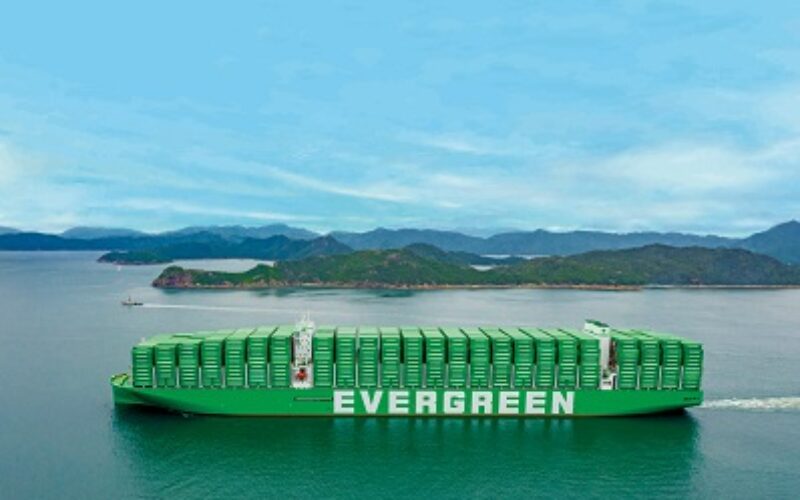
In late July, the British Standards Institution (BSI) approved the survey
methodology and results in accordance with ISO14064-1:2018 and the GHG
Protocol.
Governments throughout the globe have established carbon reduction targets
in response to the impact of climate change and the international community’s
worries about sustainability issues.
The Taiwanese Financial Supervisory Commission (FSC) also released its
‘Sustainable Development Roadmap for listed corporations’ in March of this year,
mandating corporations to reveal their GHG mission inventories in phases.
Listed companies such as Evergreen Marine, with a capital of more than
NTD10 billion ($315 million) must complete the survey of their GHG emission
sources and inventories next year, and obtain third-party verification by
2024.
Furthermore, surveys and verification of its subsidiaries are due in 2025
and 2027, respectively.
Evergreen Marine developed a task force responsible for inspecting its GHG
inventory and designing a carbon footprint platform in order to comply with
relevant legislation and satisfy diverse information requests concerning GHG
emissions from customers and other stakeholders.
The company is reportedly using advanced technologies to build a fleet of
eco-friendly vessels, which comply with the International Maritime Organization
(IMO)’s Energy Efficiency Existing Ship Index (EEXI) regulations and enable best
fuel efficiency, and continues to replace old ships with new ones.
At present, 80 per cent of ships in its operating fleet are less than 10
years old. This young fleet allows the carrier to operate with maximum
efficiency in providing transportation service with lower energy
consumption.
Contributing to this efficiency, Evergreen’s investment in the 7th
Container Center in Kaohsiung is expected to come to fruition with operations
beginning in the second half of next year.
The terminal will eventually replace present activities at the 4th and 5th
Container Centres’ independent transit hubs, which are located in distinct areas
of the port.
Consolidating activities at the brand new transit hub will significantly
minimise shunting of transshipments between the two ports and remove carbon
emissions associated with such transportation.
Evergreen has set proactive carbon reduction targets based on its 2008
carbon emissions levels, including a 50 per cent reduction in CO2 emission rate
(g/TEU-km) by 2030, a 70 per cent reduction in emission rate by 2050, and a 50
per cent reduction in overall emission volumes by 2050.
In June 2023, oil company, ExxonMobil, and Evergreen Line successfully
completed a commercial marine biofuel oil bunkering in the Port of
Singapore.