
HYDROGEN HIGHWAY FROM SCOTLAND TO ROTTERDAM LAUNCHED
The Net Zero Technology Centre and ERM have announced the launch of
the Liquid Organic Hydrogen Carrier (LOHC) for Hydrogen Transport from Scotland
(LHyTS) project.
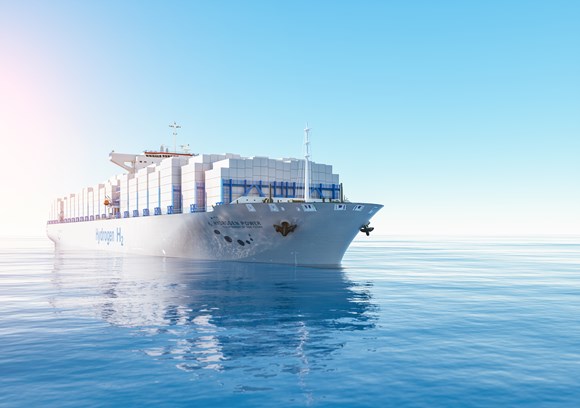
The project, announced on 14 December, will play a key role in the export
of hydrogen from Scotland to Rotterdam.
Through providing an export route to several European destinations,
including Rotterdam, this project seeks to demonstrate that LOHC, in the form of
methylcyclohexane (MCH), can be successfully transported at scale.
The project will be delivered by a diverse, international consortium,
including Axens, Chiyoda, EnQuest, ERM, Koole Terminals, Port of Rotterdam,
Scottish Government, Shetland Islands Council, Storegga and the Net Zero
Technology Centre.
Andrew Sneddon, Consulting Director at ERM said: “ERM welcomes this
opportunity and is very pleased to be part of this initiative that will be at
the centre of developing a major contribution to achieving zero emissions
energy.”
“We are thrilled to join this major energy transition project for Northern
Europe,” Executive Vice President New Development & Transformation at Axens,
Patrick Sarrazin, added.
Together, the partners will undertake engineering studies with the goal of
creating a pilot project as a prelude to large-scale export.
Hydrogen will facilitate various decarbonisation applications.
Falling in line with the Scottish Government’s hydrogen policy statement,
this project will generate 5 Gigawatts of renewable and low-carbon hydrogen by
2030, and 25 gigawatt by 2045.
UK Government Minister for Scotland, John Lamont, said: “Along with
Scottish Government, the UK Government is investing £180 million ($223 million)
in the Net Zero Technology Centre to support the projects that can deliver our
energy transition.”
The European Commission has also set a goal of importing 10 million tonnes
of hydrogen by 2030.
The Port of Rotterdam imports 13 per cent of Europe’s energy and has
ambitions to become the Hydrogen Hub of Europe.
The port will draw on its extensive import, export, and storage
infrastructure, established energy industry supply chain and pipeline
connections to other industrial clusters in northwest Europe to achieve
this.
Project Manager at the Net Zero Technology Centre, Hayleigh Barnett, said:
“Early stage studies in this project have concluded that LOHC has several
advantages over other carrier forms, such as ammonia, methanol or liquid
hydrogen.”
“Scotland is extremely fit for the production of green hydrogen, because of
its abundance of wind and the demand at the continent nearby. On top of that,
the area is one of the heartlands of the oil and energy sector. That ecosystem
of knowledge, infrastructure and companies will help to kickstart the hydrogen
economy,” said Director International of the Port of Rotterdam Authority, René
van de Plas.