
IMO CARES report stresses decarbonisation of domestic shipping in Africa, Caribbean
A new report has highlighted key actions to curb GHG emissions from
domestic shipping in Africa and the Caribbean.
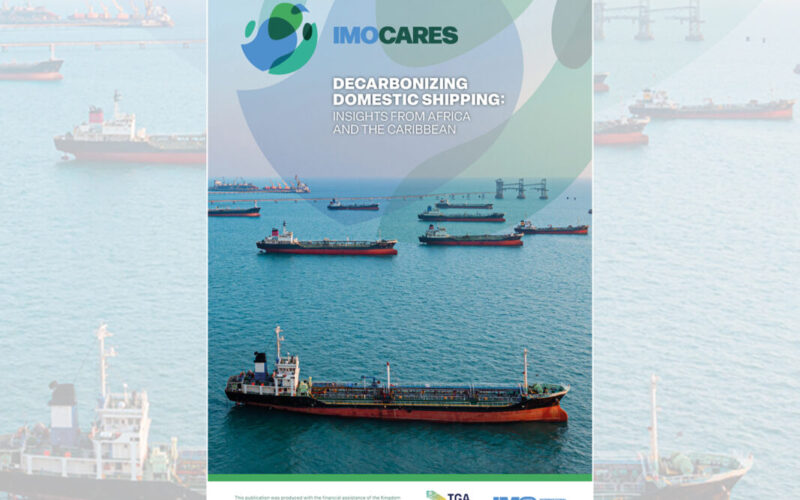
The report, developed by the International Maritime Organization
Coordinated Actions to Reduce Emissions from Shipping Initiative (IMO CARES),
underscores the critical role of domestic shipping in developing countries while
noting its significant contribution to global GHG emissions.
Domestic shipping accounts for 26.2 per cent of total shipping emissions
when considering domestic voyages, and 9.2 per cent for ships engaged
exclusively in domestic operations.
To support the decarbonisation of the sector, the report analyses domestic
fleets in African and Caribbean Small Island Developing States (SIDS) and Least
Developed Countries (LDCs), outlining priority areas for action:
-
National Action Plans (NAPs) – Develop and implement tailored NAPs to
address the specific needs of domestic shipping in SIDS and LDCs, aligning with
global climate goals and regional priorities.
-
Stakeholder Collaboration – Strengthen partnerships among governments,
ports, technology providers, and industry players to overcome barriers such as
limited funding, regulatory gaps, and technological challenges.
-
Fleet Renewal & Ports as Energy Hubs – Invest in sustainable port
infrastructure (e.g., shore power systems, alternative fuel bunkering) and
promote fleet renewal with energy-efficient and zero-emission technologies.
-
Capacity Building & Financing – Support training programmes and
innovative financing mechanisms to facilitate the adoption of green technologies
and enable the transition to net-zero domestic shipping.
Taking into account fleet composition, vessel types, age profiles, fuel
consumption and emissions, the IMOCARES report evaluates the appropriateness of
green technologies for domestic shipping in SIDS and LDCs, including wind,
solar, battery power, vessel efficiency improvements and alternative fuels.
The report calls for significant investments in zero-emission technologies,
capacity building, and policies to support sustainable practices. It emphasizes
that collaboration among stakeholders is essential, with pilot programmes and
technology trials playing a key role in scaling up the widespread adoption of
clean technologies.
IMO CARES Project Manager Anton Rhodes said: “Domestic shipping is a
lifeline for SIDS and LDCs, ensuring food and energy security, enhancing
connectivity, and creating jobs.
“At the same time, its decarbonisation is critical for achieving IMO’s
greenhouse gas reduction goals. This report serves as a roadmap for relevant
stakeholders in their decarbonisation efforts.”
Earlier this year, the IMO emphasized the significance of safety and
security in its recent 2025 Polar Maritime Seminar.