
Panama Canal water woes set to continue into 2024, experts predict
As the rainy season comes to a close at the Panama Canal, the
waterway’s authority has announced that daily limits on transit and vessel draft
will endure for the remainder of the year and throughout 2024 as water levels
remain unrecovered.
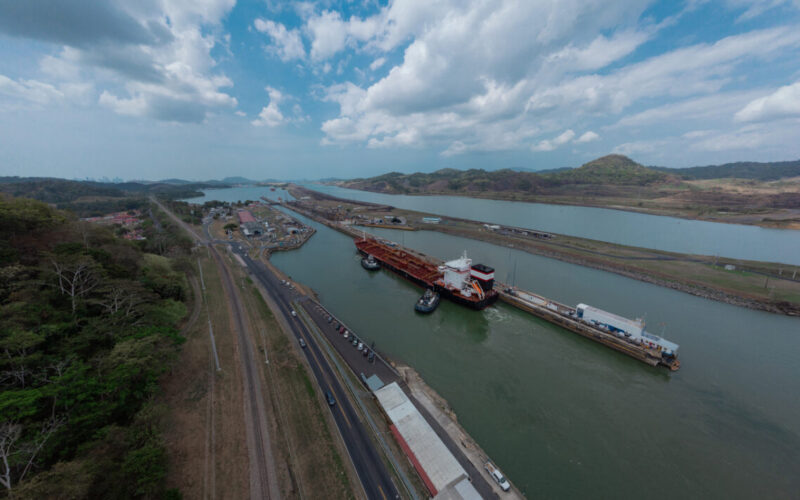
These limitations, imposed to conserve water amid ongoing drought, has
effectively resulted in a build up of congestion at the mouth of the key
waterway. With the canal handling approximately 5 per cent of world trade, the
backlog of ship consequently triggered a spike in freight rates ahead of the
incoming Christmas period, reported Reuters.
Nevertheless, this present week, starting on 4 September, has seen a ship
traffic that reflects a “normal” level for this season, according to the Panama
Canal Authority (PCA).
The canal’s authority reported that its total vessel crossing a month prior
to the end of its 2023 fiscal year reached almost 800 more than what the
authority’s budget had accounted for, reported Reuters. This contributed to a
sum of more than 13,000 transits throughout the fiscal year, thereby reflecting
strong demand by vessel owners.
Despite the easing of the bottleneck at the canal that connects the Pacific
and Atlantic Oceans by roughly 20 per cent, waiting times to transit has
conversely multiplied in July in several vessel categories, according to
Reuters. These limiting factors have, in fact, led to an increase in ship owners
opting for alternative routes to avoid such delivery delays.
However, a lack of rainfall over the Gatun Lake which feeds the Canal with
its water has meant that the canal’s water-levels reduced to 24.3 metres for
September from 26.6 metres in recent years.
Shipping through the key gateway can be very taxing on the 50-mile,
trans-oceanic canal. According to Reuters, each vessel that passes through it
uses up around 51 million gallons of water from the lake.
The canal authority reported that the lake’s water level normally climbs to
around 27 metres following the rainy season in November, before experiencing a
slight decrease to below 26 metres following the end of the dry season in
April.
Notwithstanding this, experts have gone further to predict more maritime
trade disruption in what could be an even drier period in 2024. Reuters added
that experts also argue that earlier and more intense dry seasons could see an
accelerated rate of evaporation which could result in near-record low water
levels by April.
Additionally, US economists and state officials have indeed warned of a
significant increase in inflation that the US economy may suffer, due to
unprecedented levels of drought in the Panama Canal.