
SUPPLY CHAIN DISRUPTIONS CONTINUE TO PLAGUE AUSTRALIAN CONTAINER PORTS
According to a report from the Australian Competition and Consumer
Commission (ACCC), the COVID-19 pandemic, and other developments, have continued
to cause significant congestion and delays in the container freight supply chain
in Australia throughout 2021–22. The report cited three factors that have
exacerbated these effects: low shipping schedule reliability, increased size of
ships calling Australian container ports, and labor shortages throughout the
supply chain.
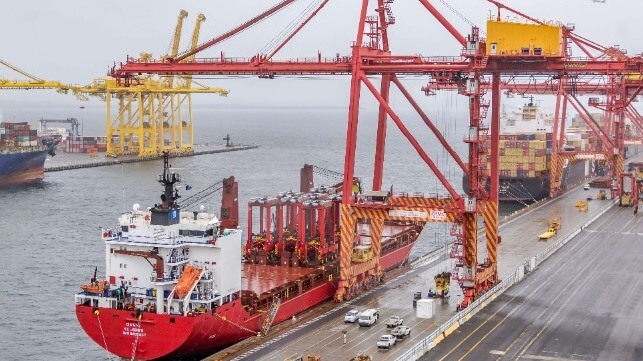
Stevedores have informed the ACCC that low vessel schedule reliability is a
critical factor contributing to congestion and has resulted in ‘vessel bunching’
at ports. While global schedule reliability improved over 2022, it remains well
below pre-pandemic levels. This creates significant peaks and troughs for
stevedores in handling containers.
There has been a longer-term trend towards larger ships in container
shipping globally. The proportion of port calls made by ships with gross tonnage
above 80,000 at Australian container ports has increased from 3.8 percent in
2018–19 to 14.3 percent in 2021–22. Servicing these larger ships presents more
operational challenges and further amplifies the peaks and troughs throughout
the container supply chain.
The report stated that some market participants raised concerns about staff
availability throughout 2021–22 due to sickness or isolation requirements. This
has been worsened by broader labor shortages throughout the supply chain, with
stevedores finding it challenging to identify appropriate new hires and retain
them long enough to develop skills and industry knowledge. In particular, the
shortage of truck drivers has contributed to increased congestion at some
storage facilities and empty container parks.
These delays at the ports have led to some importers preferring to hold
higher inventory levels, moving from a ‘just-in-time’ to a ‘just-in-case’
business model. This puts further pressure on the supply chain and has increased
demand for warehousing space, driving higher rents.
All these factors contributed to ongoing congestion in the supply chain,
sometimes overwhelming its capacity to unload efficiently, transport, process,
unpack and return containers. Stevedores stated that it had been more
challenging for them to allocate labor and equipment, resulting in stevedores
taking longer to move containers to and from ships.
Despite these challenges, there are signs of improvement. It is estimated
that global container port congestion has halved between January and August
2022.