
The Netherlands invests $150 million for shore power plants
The Ministry of Infrastructure in the Netherlands has announced it
will allocate €140 million ($150 million) over the next few years to help
realise shore power plants in seaports.
A further €40 million ($43 million) will be added from the climate
fund.
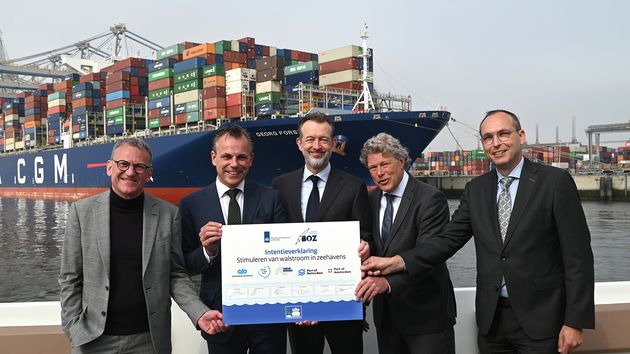
The Minister of Infrastructure and Water Management of the Netherlands,
Mark Harbers, signed a letter of intent with the Branch Organisation for
Seaports (BOZ) on 22 May, setting out public-private agreements on the roll-out
of shore-based power.
With the forthcoming Alternative Fuels Infrastructure Regulation (AFIR),
European ports will be required to supply so-called AFIR vessels with shore
power from 2030.
These include container ships, cruise ships, passenger ships, and combined
passenger and cargo ships from 5,000 gross tonnage.
The funds for shore power are mainly intended for terminals where AFIR
vessels moor, but other shore power projects for maritime shipping will also
become eligible for subsidies.
BOZ previously calculated that some 270 megawatts of shore power capacity
will need to be installed in ports for AFIR vessels in the coming years to meet
the upcoming obligation, requiring an investment of more than
€300 million ($322 million).
The sector organisation assumes this will lead to an annual reduction of
over 220 kilotonnes of carbon dioxide (CO2), and a reduction of 2.5 kilotonnes
of nitrogen oxides (NOX).
According to the Port of Rotterdam, realising shore power facilities will
not only bring environmental benefits and reduce noise pollution, but it may
also create nitrogen space for climate projects in the port.
The five major seaports of national importance are working with the
Ministry of Infrastructure and Water Management and the terminals on the shore
power task in the respective ports.
These are the Ports of Rotterdam, Amsterdam, Groningen, Moerdijk and North
Sea Port (Vlissingen, Terneuzen and Ghent).
“To meet the climate targets, it is essential that all sectors do their
part, including the maritime sector,” Minister Harbers said.
“I am glad that with this subsidy scheme, we can lend a helping hand to the
sector and will further encourage the installation of shore power.
“This will not only result in environmental gains, but also to fewer noisy
generators on vessels moored at the quay. It will hopefully also free up space
for development in the ports as well as new climate projects.”
Earlier in the year, the Swedish government approved Ports of Stockholm’s
request to submit a joint application for a grant from the EU’s Connecting
Europe Facility (CEF).
More recently, the shore power infrastructure at Terminal 5 of the
Northwest Seaport Alliance (NWSA) welcomed the first ship to plug into the
infrastructure while at berth.