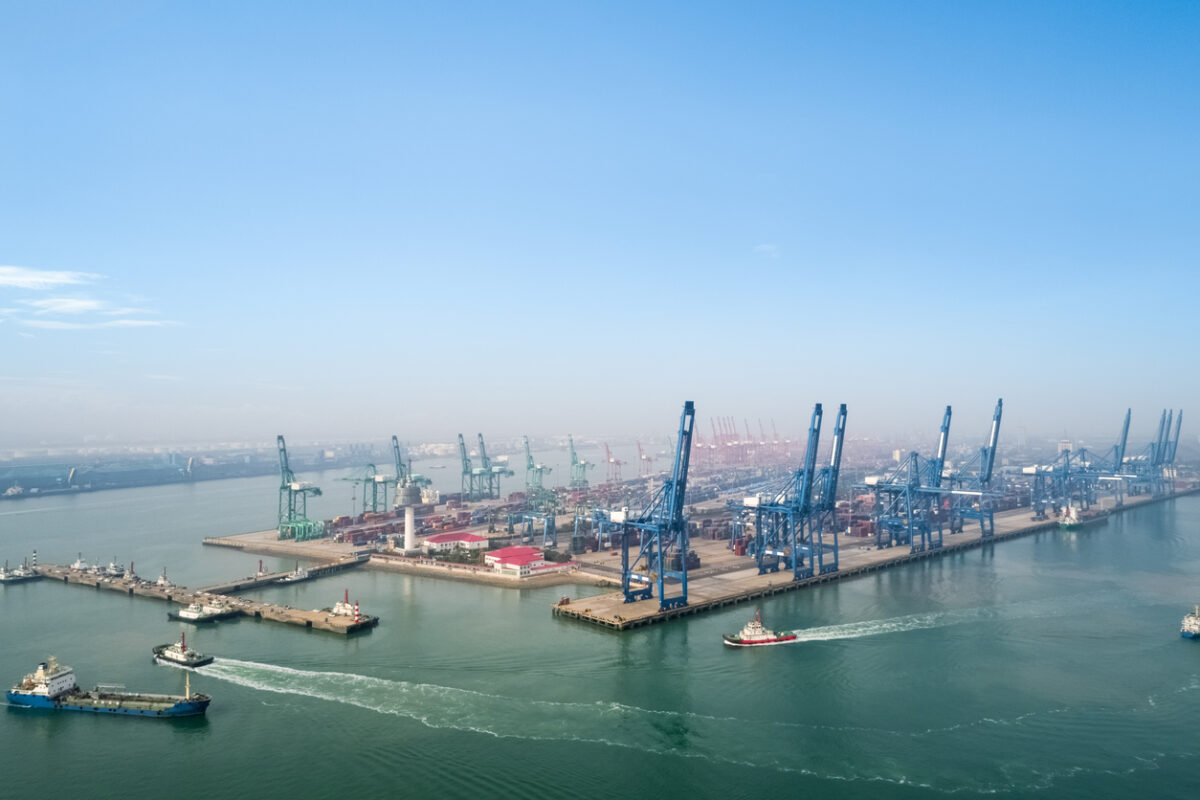
Tianjin Port transformed by Huawei autonomous driving software
Supply chain operators around the world have historically
experienced challenges in port driver management – notably due to the industry’s
innate challenges of heavy workloads, tiresome shift patterns, and safety
hazards.
At the Mobile World Congress 2023, global telecommunications and
connectivity provider Huawei held a Transportation Roundtable with members of
the media on the company’s work in the port sector. Yue Kun, CTO of Smart Road,
Waterway, and Port BU of Huawei, introduced the successful use case of 5G+L4
autonomous driving at Tianjin Port. “Smart horizontal transportation using 5G
networks and Intelligent Guided Vehicles (IGVs) is ideal for container
terminals,” Yue Kun told media members. “The use of 5G and L4 autonomous driving
is enabling both business and social value.”
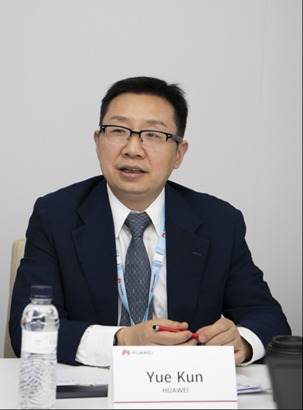
Yue Kun, CTO of Smart Road, Waterway, and Port BU of Huawei,
discussed
5G+L4 smart transportation at Transportation Roundtable during MWC 2023
Huawei is a leading global ICT infrastructure and smart device provider.
The company offers 5G and optical networks, intelligent sensing, computing,
storage, cloud, autonomous driving parts, and digital power. Product portfolios
include seven networks of smart port ICT infrastructure, and AI algorithm model
asset services.
Tianjin Port
The Port of Tianjin is an important shipping and logistics hub. It
maintains trade with more than 800 ports across over 200 countries and regions
around the world. It is the largest port in northern China, and handled a total
of more than 20 million TEU in 2022.
Huawei and the Port of Tianjin partnered to build a new smart container
terminal which integrates automation and intelligence, compared to legacy or
‘brownfield’ terminals that rely on manual operations.
To manage the challenges ports face, at Tianjin Huawei has deployed 5G and
L4 autonomous driving for the Tianjin Port Second Container Terminal. With the
challenges of recruitment and retention of drivers which can hamper operations,
the new fully unattended system can ease recruitment challenges for companies.
Huawei’s solution now enables routine operations of 76 fully-loaded Intelligent
Guided Vehicles (IGVs) for over a year.
“Ports are typically semi-closed and demand low-speed operations. As such,
container terminals make for the perfect environment to automate horizontal
transportation using 5G networks and IGVs,” Yue Kun told.
Utilising Huawei’s cutting-edge technologies, driver challenges have been
met as a result of the company’s fully decoupled ecosystem, featuring
vehicle-road-cloud-network synergy. At Tianjin, after millions of kilometres the
IGVs require a manual takeover rate of a staggering 0.1 per cent, which is below
the 5 or 6 per cent industry average. Huawei has utilised its intelligent ICT
infrastructure for ports, applying big data and AI to allow for smooth fleet
scheduling and safe and efficient horizontal transport around the Second
Container Terminal.
The smart horizontal transportation system deployed in Section C of the
Beijiang Port Area has been running stably for more than one year on a regular,
large-scale, and commercial basis. Strong support from the customer is “an
important factor in the cooperation success,” Yue Kun outlined.
“Tianjin Port hopes to use innovative technologies — such as 5G, AI, and
autonomous driving — to build long-term competitive terminals and enable highly
efficient operations in the port.
“This marks progress for the entire port industry,” Yue Kun added. “We hope
that Huawei’s practice of 5G plus L4 autonomous driving in ports can be used as
a reference for industry development and inspire innovative ideas.”
How can ports get better?
A technology giant such as Huawei will have a wealth of experience in
implementing smart technologies in areas all of the world. But how can ports
improve through technology, and what makes a port smart?
“Conventional ports rely on heavy manual operations. Today, many positions
still require high-intensity physical labour,” Yue Kun explained. “As
technologies and digitalisation advance, ports are becoming more automated and
smarter.
“The new industrial revolution, including the application of autonomous
driving and AI technologies, will significantly benefit port production security
management, green development, intelligent decision-making, and efficiency
increase.”
Combining autonomous driving and AI technologies with enhanced 5G
connectivity, edge computing, and connectivity across the terminal of managing
IGV scheduling in servicing oncoming ships, the project by Huawei will allow
Tianjin port to remove potential shortfalls in performance from team members,
resulting in improved productivity, fewer wasted terminal moves, and
consequently reducing emissions.
On the subject of decarbonising the port, Yue Kun said that the Port of
Tianjin shifted away from fossil fuels in port cranes to relying on electricity
whilst the terminal was under construction. “We use clean energy to help Tianjin
Port reduce carbon emissions and inch closer to zero-carbon development. Using
these advanced technologies has also helped to improve efficiency and reduce
costs,” Yue Kun said.
“Future ports must be smart and green, driven by technologies and the
pursuit of more sustainable development.”