
TOP 10 PORTS IN CHINA 2022
As 2022 is almost at its end, PTI has taken on the responsibility
of counting down the top 10 ports in China this past year.
PTI is reviving its series that highlights the biggest and most effective
ports from across the globe.
Despite the fact that the official Ningbo Shipping Exchange data for the
final two months of the year are still awaited, China’s maritime industry has
had a very successful and busy year in 2022.
Chinese ports handled 244.9 million TEU in total for the first ten months
of 2022, which concluded on October 30. When compared to the same period in
2021, this indicates a rise of 4 per cent.
The container handling data for the past year have given us a clear picture
of which ports will be leading the way towards 2023.
10. Port of Lianyungang
Near the mouth of the Qiangwei River in the Northern Jiangsu region of
China, Lianyungang handled 4,440,000 TEU in the first 10 months of 2022,
representing a growth of 6.4 percent year over year.
In July of this year, Vostochnaya Stevedoring Company (VSC) launched SITC
South Korea – China – Vietnam service. The Port of Lianyungang is one of the
ports included on the new service’s port rotation.
9. Port of Rizhao
Along with increasing container handling numbers, the Port of Rizhao has
recently had success. Container throughput at the deep-water seaport on the
coast of the city of Rizhao increased 12.7 per cent from the same time in
2021.
4,860,000 TEU were handled by the Port of Rizhao.
Rizhao Port in East China’s Shandong Province has increased its container
volumes by more than a fifth since the beginning of 2022. Volume of
international freight trains has skyrocketed, increasing by 81.5 per cent
year-on-year, thereby contributing to their annual increase.
8. Beibuwan Port
Beibuwan Port, also known as Beibu Gulf Port, is a seaport in the Guangxi
province of China owned by the Guangxi Beibu Gulf International Port Group.
The port saw the biggest year-over-year growth of any port on this list in
the first ten months of 2022, with a total throughput of 5,580,000 TEU, an
enormous 17 per cent increase over the same period in 2021. Beibuwan scored the
biggest year-over-year rise on this ranking for the second consecutive year.
7. Port of Xiamen
The Port of Xiamen, situated along the Jiulongjiang River in southern
Fujian, is a crucial deep-water port for the Chinese economy.
The port handled a total of 10,180,000 million TEU for the year, an
increase in throughput of 1.8 per cent over the first ten months.
This past year, COSCO SHIPPING introduced a new Wuhan-Xiamen sea-rail
intermodal train, with the inaugural trip occurring on 26 June. This has
contributed to Xiamen’s increased throughput.
6. Port of Tianjin
The principal marine entryway to the capital of China is provided by the
Port of Tianjin, the largest port in northern China. The port handled 18,360,000
TEU in total, a 4.3 per cent increase from the previous year. Tianjin is one of
the spearheading ports for environmental reform and decarbonising the maritime
industry.
Tianjin Port is now among the most technologically sophisticated facilities
in the world thanks to Tianjin Port Group (TPG) and Huawei’s fully constructed
new smart terminal earlier this year.
5. Port of Guangzhou
Guangzhou Port, which had previously ranked fourth on our ranking of
China’s busiest ports, has now fallen to fifth place.
This Guangdong province port handled 20,270,000 TEU in total from January
to October of 2022, a rise of 1.8 per cent, the joint second-smallest percentage
growth from 2021 of all the ports on this list.
The shift in COVID-19 cases throughout the course of the year may have had
a serious impact on Guangzhou’s industrial centre and contributed to drops in
import and export ocean shipping volume after the imposition of COVID-19
lockdowns.
4. Port of Qingdao
The port of Qingdao moves up one rank from the previous year’s list to
fourth, solidifying its place among China’s top five ports.
Between January and October of this year, this significant port on the
Yellow Sea handled 21,390,000 TEU, representing a rise of 7.6 per cent year over
year. Despite moving up this ranking, the Port of Qingdao’s percentile rise was
2.7 per cent lower than in 2021 where it achieved 10.3 per cent increase from
2020.
One of China’s fastest growing ports is the Port of Qingdao, which has a
number of cutting-edge technological initiatives aimed at boosting commerce and
commercial transparency. A smart tech cluster is being developed at the Port of
Qingdao by SITC. Additionally, Qingdao Port became the first 5G intelligent port
and hydrogen-powered port in the world.
3. Port of Shenzhen
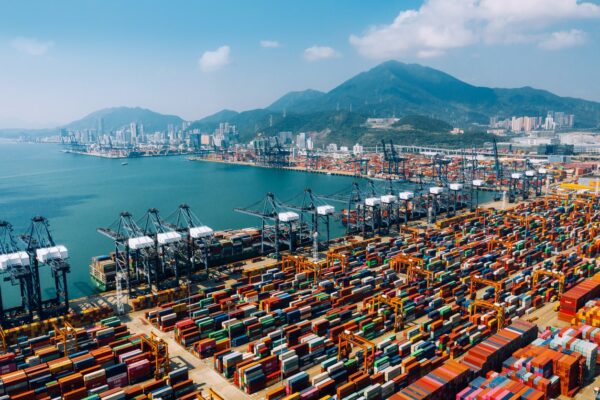
The Port of Shenzhen, which used to be the second busiest in the nation,
only witnessed a 1.7 per cent growth from 2021 to handle 24,180,000 TEU, a
decline of 9 per cent from the container handling growth experienced from 2021
to 2020.
2. Port of Ningbo-Zhoushan
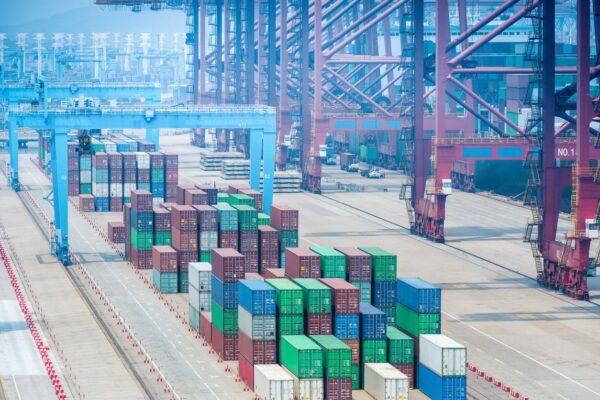
Previously third place in 2020, the Port of Ningbo-Zhoushan remains the
second-busiest port in China this year.
From January to October 2022, the port in the Zhejiang province handled
28,890,000 TEU, an increase of 8.1 per cent over the same period in 2019.
However, compared to 2021, when the yearly rise was 11 per cent, this indicates
even another decelerated growth.
All Eastern provinces have upgraded their epidemic prevention and control
efforts as a result of China seeing its greatest COVID-19 rise in the past year
since the pandemic started. Despite the temporary shutdown of highway exits and
service areas, the Port of Ningbo-Zhoushan is continuing to operate
steadily.
1. Port of Shanghai
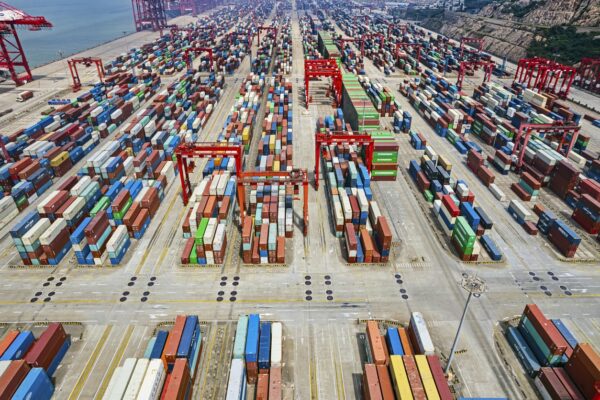
The Port of Shanghai, which continues to set the standard in China’s marine
sector, tops our list of Chinese ports once more. The Port of Shanghai, which
surpassed the Port of Singapore as the largest port in the world, now has a
total of five operating zones.
The Port of Shanghai, which also topped our last ranking, handled a
staggering 39,080,000 TEU in the first 10 months of 2022. As in 2021, this was
the only port to exceed 30 million TEU so far this year.
Although the port had a rise of 8.4 per cent from 2020 to 2021, the
percentile growth to 2022 was only 0.2 per cent.
The Port of Shanghai, the biggest container port in the world, has opened
operations for an empty container transportation centre. According to government
sources, the new centre, which can handle 3 million TEU annually, would increase
the port’s capacity for handling cargo, foster domestic and international
commerce, and consolidate Shanghai’s position as a hub for international
shipping.