
Long Beach’s 50-year bets in a 50-day world
What is the hardest decision facing port leaders today, and how is it shaping Long Beach’s investment priorities under your 2050 Vision?
The hardest decision is how best to invest billions in infrastructure that will last 50 years when the trade picture can change in 50 days. In 2019, China accounted for about 70 per cent of our business. Today it’s 55 per cent, while trade with countries like Vietnam, Thailand and Indonesia is growing fast. Even so, last year we handled an all-time record of 9.9 million TEUs.
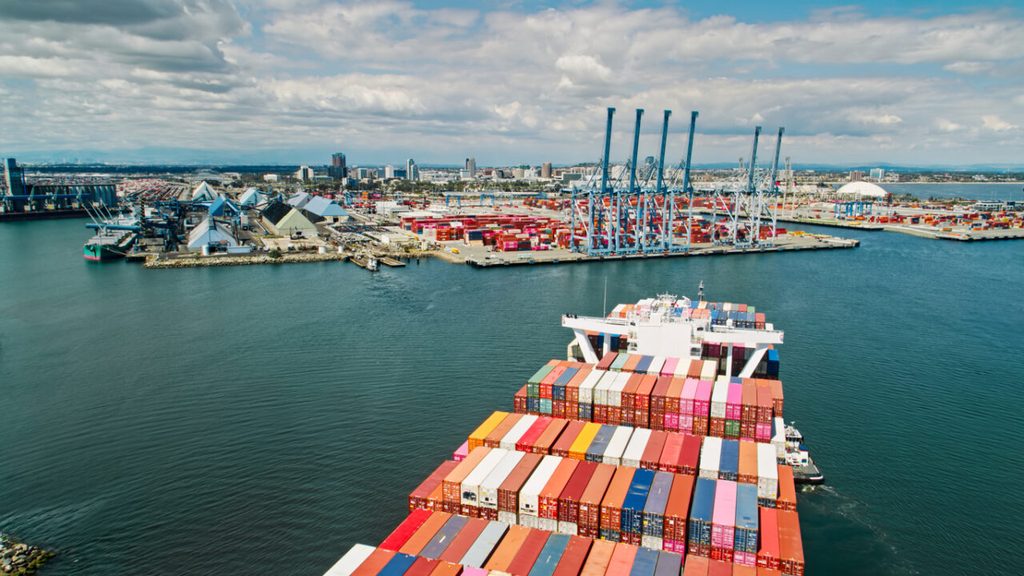
So, we invest in what pays off under any scenario. Our 2050 Vision is to double our volume to 20 million TEUs annually. We won’t get there by doubling our land, because that would take too long and cost too much. Instead, we’ll densify, electrify and modernise, and move more cargo by rail. That’s the logic behind our $3.3 billion capital programme, the largest of any port in North America, and every dollar of it is committed.
We’re also running a “hurry-up offense.” 2050 is closer than it sounds, so speed of delivery is itself a strategic decision.
Pier B is intended to cut ship-to-rail transfer times from around four days to 24 hours. Beyond the infrastructure, what needs to change in how terminals and rail partners work together?
Pier B will triple our on-dock rail capacity. But getting a container from ship to train in 24 hours instead of four days takes more than track. Three things have to change.
First, decisions about rail transport need to be made earlier. Cargo should be sorted by inland destination while it’s still on the water, so shippers, carriers, terminals and railroads need to share data before the ship arrives. Second, everyone needs to work to the same clock, with terminal shifts, rail crews and train departures lined up around the clock. Third, partners need shared performance measures. We’re already working with the Class I railroads so their own plans make the most of Pier B.
The urgency is real. Cargo from Southeast Asia spends two to three more days on the water than cargo from China, and Pier B helps us win that time back. We can already see what coordination delivers. Recently, we had 102,000 containers on our terminals with zero ships at anchor and no truck queues. This is what it takes to keep record cargo volumes moving efficiently and reliably.
What measurable difference is CargoNav making to cargo movement today, and what barriers remain to getting more businesses participating and sharing data?
CargoNav gives shippers, truck drivers and terminals one shared view of cargo. Shippers can track a container from its origin through the port. Truck drivers will be able to book appointments at our Port of Long Beach container terminals in a single system.
More than 17,000 trucks are registered to move containers through the San Pedro Bay port, 618 of which are zero-emissions, including 515 battery-electric trucks and 103 hydrogen fuel cell trucks.
The remaining barriers come down to trust and utilisation. Companies worry that sharing data means giving up a competitive edge, so we’re clear that CargoNav is about visibility, not exposing commercial information. Connecting older systems takes time and money, especially for smaller trucking companies. And businesses join when they see results, so we have to keep proving the value. Every company that joins makes the tool more useful for everyone else.
As Long Beach advances towards zero-emissions operations, how are you ensuring power and charging infrastructure are ready when terminal operators need them? What is the greatest challenge in aligning those timelines?
The challenge is that the clocks run at different speeds. A terminal can order electric equipment and have it within a year or two. New grid capacity can take most of a decade. If we wait for the orders before planning the power, we’re already late.
So, we plan the power first. We work closely with our power provider, Southern California Edison, so our planning cycles line up. Last November we signed a cooperative agreement with the South Coast Air Quality Management District. Under it, we’ll produce a zero-emissions infrastructure plan for container terminals by the end of 2027, in coordination with Edison.
We’re also building ahead of demand, putting infrastructure in place now to power the equipment we expect to use in future operations. Yesterday’s grid won’t power tomorrow’s port, so we’re evaluating every carbon-free source: solar, batteries, hydrogen, offshore wind and small modular reactors through our agreement with the US Maritime Administration.
The proposed Pier T redevelopment would involve phased construction while the terminal remains operational. How would you manage that transition, and which improvements would you prioritise first?
Total Terminals International (TTI) is leading the development and phasing of the project at Pier T. As one of our busiest terminals, Pier T handles about 3 million TEUs a year, and we plan to double that volume while electrifying the equipment. The project is still undergoing environmental review, so I’ll focus on the principles.
First, never remove more capacity than we can compensate for. Work would be sequenced berth by berth and yard section by yard section, so the terminal can continue handling the largest ships throughout construction, and the heaviest phases would be planned around peak season. Second, we need one schedule for everyone: our tenant and its customers, our dock workers and the railroads. Cargo owners should hear about changes months ahead, not days ahead.
Phases 3 and 4 of TTI’s project will expand the terminal’s on-dock rail capacity, building on the Pier B On-Dock Rail Support Facility. Moving cargo from our port by rail remains a priority.
As you prepare to meet other port leaders in London, what is one challenge Long Beach cannot solve on its own, and what practical cooperation would help address it?
We focus on what we can control and work with others where we can help shape and influence outcomes. One challenge we cannot solve on our own is cleaning up the ships themselves. Ocean-going vessels account for more than half of the greenhouse gas emissions tied to the San Pedro Bay ports, and a ship that calls at Long Beach also calls at Busan, Singapore and Rotterdam. No port can decarbonise a global fleet alone.
Our Clean Marine Fuel Feasibility Assessment with the Port of Los Angeles found that much of the infrastructure needed for methanol fuelling already exists here. What’s missing is demand. We’re working on that too: in May we launched a $1 million challenge for the first company to bunker a containership with methanol.
Cooperation is what makes it scalable. With the Port of Los Angeles, we’re part of green shipping corridors with Shanghai and Singapore. The next step is piloting fuelling operations and developing common safety and operating standards for alternative-fuel bunkering, so carriers aren’t relearning the rules at every port of call. Aligned guidance and incentives would also send shipping lines one consistent signal across the network. IAPH, through the work of its Clean Marine Fuel working group, is the right forum to develop that alignment.