
Klaipėda, Lübeck, Hamburg expand port and trade links
A joint delegation visit organised by Lübecker Hafen-Gesellschaft (LHG) and
Hafen Hamburg Marketing (HHM) has reinforced port cooperation between Klaipėda,
Hamburg, and Lübeck.
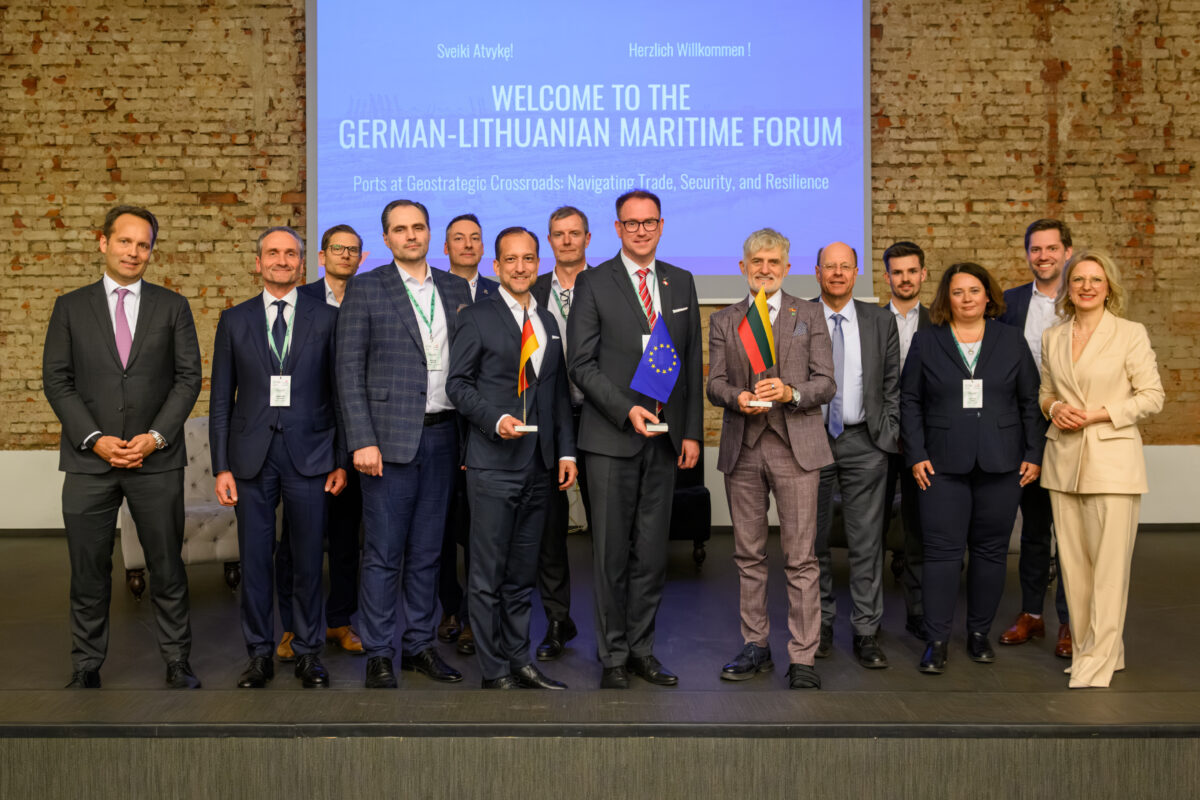 From 18 to 20 March 2026, the programme combined political discussions,
company visits, and the German-Lithuanian Maritime Forum.
Around 25 representatives from Lübeck and Hamburg travelled to Lithuania,
joining more than 100 international guests from politics, the port industry, and
logistics.
Discussions focused on expanding maritime links and transport corridors
between the three ports, enhancing Baltic Sea supply chain resilience, and
exploring intermodal transport opportunities connecting Lithuania with Central
and Southern Europe.
The delegation was led by Jan Lindenau, Mayor of Lübeck, and Niels Wiecker,
Director of Port and Logistics at Hamburg’s Ministry of Economy, Labour and
Innovation.
A central highlight was the German-Lithuanian Maritime Forum, moderated by
Marina Basso Michael, Regional Director Europe at HHM, under the theme: “Ports
at the Geostrategic Crossroads: Navigating Trade, Security, and Resilience.”
Sebastian Jürgens, Managing Director of Lübecker Hafen-Gesellschaft, said:
“Quite literally, there is still a great deal of cargo on the road. Germany
ranks first among Lithuania’s import partners and second in exports behind
Poland. By shifting more of this traffic to ferry and rail, we not only
strengthen supply chain resilience but can also reduce CO2 emissions by around
70 per cent.”
The delegation highlighted the growing momentum of Baltic transport flows.
Six weekly ferry departures connect Lübeck and Klaipėda, and approximately 60
weekly intermodal links make Lübeck a key corridor between Lithuania, the Baltic
region, and Central and Southern Europe.
Jan Lindenau, Mayor of Lübeck, added: “The visit significantly intensified
existing contacts and has given new momentum to the twin-city partnership with
Klaipėda. The next step is to translate this exchange into concrete
projects.”
He also noted ongoing investments in Klaipėda in infrastructure,
sustainable propulsion, and port security.
Niels Wiecker, Ministry of Economy, Labour and Innovation, said: “Robust
partnerships in the Baltic Sea region are becoming increasingly important from
both an economic and geopolitical perspective. Hamburg contributes its global
market connectivity, Lübeck its strength as a direct Baltic hub, and both cities
their function as hinterland hubs. This is precisely where the strategic added
value of this cooperation lies.”
Hendrik Meyn, Executive Board Member of HHM, noted that the forum also
showcased trade growth: direct container traffic between Lithuania and Hamburg
increased by 15.4 per cent in 2025, with a total throughput of 142,000 TEU,
making Lithuania Hamburg’s strongest trading partner in the Baltic region.
In 2025, the Port of Klaipėda handled roughly 39 million tonnes of cargo,
representing 40 per cent of the total throughput of the three Baltic states.
Algis Latakas, Director General of Klaipėda State Seaport Authority,
highlighted the port’s strategic role, noting a doubling in military cargo to
56,100 tonnes, underlining Klaipėda’s importance for resilience and crisis
logistics.
The Baltic initiative forms part of a broader international outreach by
Hamburg’s port and maritime sector.
As part of the official delegation visit by the Senate of the Free and
Hanseatic City of Hamburg to India, representatives focused on deepening
cooperation and strengthening dialogue with partners in Chennai and Mumbai,
signalling a continued strategy to expand Hamburg’s port partnerships
globally.