
Maersk vessel carries out methanol bunkering simulation in Japan
A.P. Moller – Maersk (Maersk) has co-hosted Japan’s first “methanol
bunkering simulation” at the Port of Yokohama.
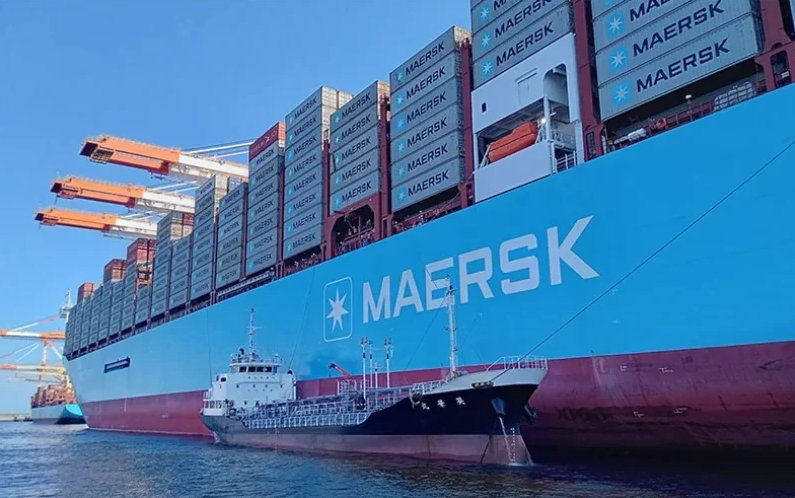
The Alette Maersk, Maersk’s fifth dual-fuel methanol vessel, participated
in the methanol bunkering simulation conducted by Kokuka Sangyo’s methanol
tanker, Eikamaru.
To lay the foundation for future methanol bunkering, the involved parties
collaborated to test key operations, including berthing, unberthing, and hose
connections.
The bunkering simulation follows Maersk’s Memorandum of Understanding (MoU)
with the City of Yokohama and Mitsubishi Gas Chemical on the development of
methanol bunkering infrastructure in Yokohama.
This initiative also receives support from additional stakeholders,
including the Ministry of Land, Infrastructure, Transport, and Tourism’s Port
and Harbor Bureau.
Japan is currently in the process of developing methanol fuel bunkering
guidelines. Maersk claimed that insights gained from this initiative will serve
as valuable references in establishing these guidelines and in developing
methanol fuel supply infrastructure and processes in Japan.
“The Ports and Harbors Bureau of the Ministry of Land, Infrastructure,
Transport and Tourism has announced plans to convene a study group to explore
the development of methanol bunkering hubs in Japan,” said Nakagawa Kenzo,
Director of the Industrial Port Policy Division at the Ports and Harbours
Bureau.
“Establishing methanol bunkering hubs in our ports is vital, and we will
accelerate discussions, leveraging the insights from this simulation.”
“Maersk is committed to a decarbonised future, and it is our great pleasure
to support Japan’s ambition in decarbonising the shipping and energy sectors,”
said Toru Nishiyama, Managing Director, Northeast Asia, Maersk.
“We look forward to collaborating with the broader industry and ecosystem
in Japan to accelerate the adoption and development of lower emission practices
in this country.”
Earlier this month, Maersk opened a new 402,000-square-foot facility in El
Paso, Texas to support the growing demand for logistics services at the border
of the US and Mexico.