
IMO advances 2026 strategy to cut ocean plastic from ships
The International Maritime Organization (IMO)’s Sub-Committee on Pollution Prevention and Response has finalised a draft strategy to tackle plastic pollution from ships, including fishing vessels.
Meeting in London from 9 –13 February 2026 for its 13th session (PPR 13), the committee completed the 2026 Strategy and Action Plan to Address Marine Plastic Litter from Ships, which will be submitted for adoption at Marine Environment Protection Committee 84 from 27 April – 1 May 2026.
The 2026 strategy will replace IMO’s 2021 plastics strategy and 2025 action plan, consolidating them into a single framework and reaffirming the organisation’s ambition to achieve zero plastic waste discharges to sea from ships by 2030.
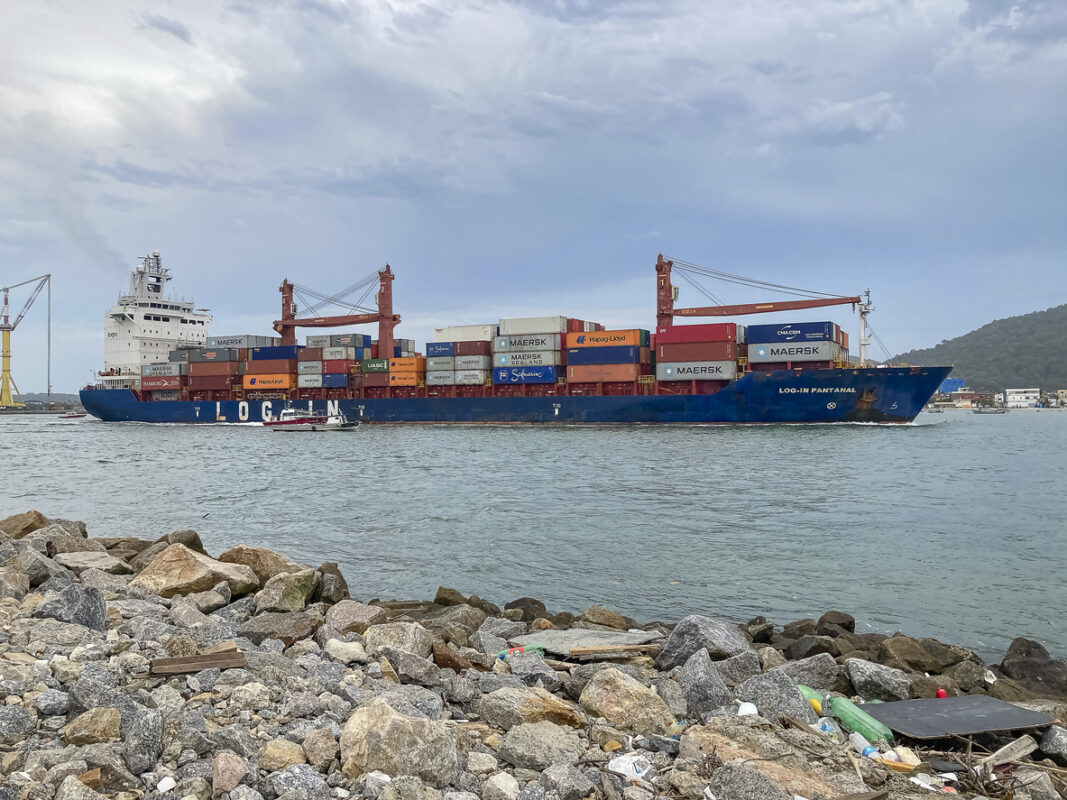
The plan focuses on reducing shipping’s contribution to marine plastic pollution, improving port reception and onboard waste handling, and strengthening international regulation and compliance, alongside enhancing seafarer training, public awareness, and technical support for Member States.
The Sub-Committee advanced targeted measures on specific sources of marine litter. On plastic pellets, or “nurdles,” it reviewed legal pathways to mitigate environmental risks from containerised transport and recommended that MEPC 84 consider a new mandatory code under MARPOL Annex III and/or SOLAS.
Regarding abandoned, lost, or discarded fishing gear, a draft circular was approved promoting gear marking systems and implementation of the FAO Voluntary Guidelines on Marking of Fishing Gear.
These guidelines provide a risk assessment framework and practical marking manual, supporting improved reporting, recovery, and disposal, and will be submitted to MEPC 84.
Work on biofouling management also advanced, following MEPC 83’s decision to develop a legally binding framework to prevent the spread of invasive aquatic species via hulls.
The Sub-Committee recommended a standalone legal instrument and finalised terms of reference, with a correspondence group tasked with defining objectives, drafting guidelines, and preparing a work plan for implementation.
Other PPR 13 outcomes include final NOx Code amendments, draft MARPOL Annex VI changes on VOCs, ongoing work on black carbon and polar fuels, continued review of exhaust gas cleaning systems, agreement in principle on sewage and oily bilge water amendments, and approval of revised guidance for machinery-space waste systems and Oil Record Book Part I.
In January, IMO faced a complex landscape in 2026, shaped by geopolitical tensions, rising security risks, urgent decarbonisation goals, and the continuing challenge of seafarer welfare, Arsenio Domínguez told a recent press briefing.