
Ports of Los Angeles, Long Beach and Shanghai outline green shipping corridor plan
The Ports of Los Angeles, Long Beach, and Shanghai have issued an
outline of a Green Shipping Corridor Implementation Plan to accelerate emissions
reductions across the Pacific Ocean.
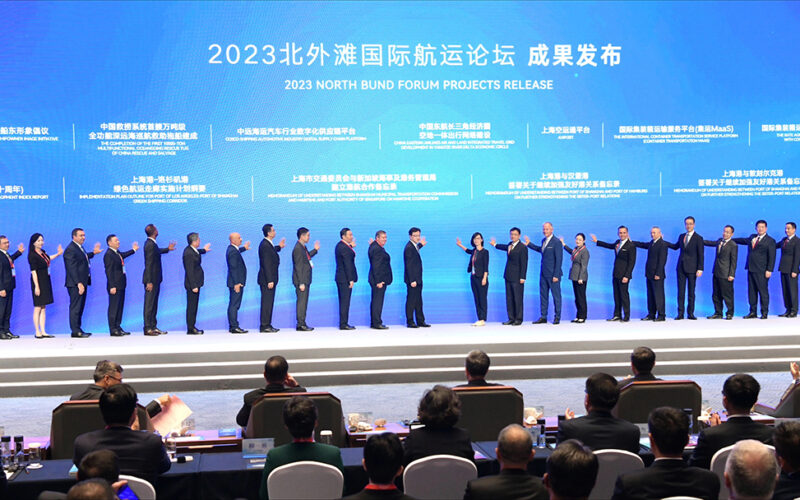
The three ports deem this proposal as a significant step towards
decarbonising the global supply networks that power our economy and moving to
zero-carbon-emission ships.
It intends to highlight cutting-edge goods movement technology,
decarbonisation applications, and best management practises to improve
efficiency.
As part of the historic agreement, the carrier partners will begin
deploying reduced lifetime carbon capable ships in the corridor by 2025, and
will collaborate to demonstrate the possibility of deploying the world’s first
zero lifecycle carbon emission containerships by 2030.
CMA CGM, COSCO Shipping Lines Co., Ltd., Maersk, and ONE are among the
carrier partners. Shanghai International Port (Group) Co., Ltd., the China
Classification Society, and the Asia Maritime Technology Cooperation Centre are
among the key partners.
Gene Seroka, Executive Director of the Port of Los Angeles, said: “This
trans-Pacific green corridor will be a model for the global cooperation needed
to accelerate change throughout the maritime industry. Reducing emissions in
this corridor will yield substantial reductions.
“For perspective, most of the emissions associated with moving cargo by
ship occur in the mid-ocean part of the journey between ports. This corridor
will help reduce mid-ocean emissions while continuing the work we have done to
cut emissions within our ports.”
Mario Cordero, Chief Executive Officer of the Port of Long Beach, stated:
“This initiative will drive emissions reductions across the world’s largest
ocean and lead to greener practices from supply chain participants along these
vital trade routes.
“The new and innovative vessel technologies, increased availability of
sustainable fuels and better practices created through this green corridor will
also impact society’s transition to a cleaner future far beyond the areas served
by our ports.”
Mark Watts, Executive Director of C40, said: “C40 is proud to support this
first-of-its-kind green shipping corridor aimed at demonstrating that
zero-carbon shipping at scale is feasible by 2030, and that less polluting ships
and ports will also mean cleaner air, less noise and more jobs for local
communities.”
From January to April 2023, China’s ports saw an increase in container
volume reaching 95.4 million TEU.