
Georgia Ports receives $120 million for electrical and rail infrastructure
The Georgia Ports Authority (GPA) has outlined plans to improve
operational sustainability for neighbouring communities in Savannah and
Brunswick as the driver of three federal grants totalling more than $120
million.
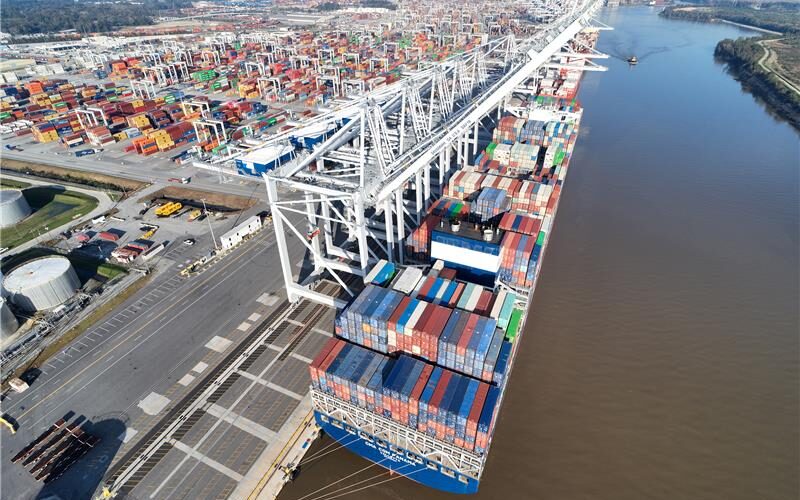
A $49.8 million Maritime Administration grant will reportedly help ensure
uninterrupted power supply at the Port of Savannah’s Garden City Terminal.
The project will create an on-terminal electricity distribution network fed
by GPA-owned generators and substations. The ability to more quickly restore
power will protect temperature-controlled cargo such as food and medicine to
minimise disruptions in the event of a natural disaster.
Georgia Ports Authority President and CEO Griff Lynch said a more resilient
power supply is also key to a GPA initiative transitioning from diesel to
electric-powered yard equipment. GPA will match the federal grant with $88.2
million.
Moreover, the U.S. Environmental Protection Agency has awarded GPA $48.7
million to provide shore power at a total of four berths, three in Savannah and
one at the Port of Brunswick. GPA will match the grant with $5.4 million in
local funding.
The new electrical infrastructure will help ocean carriers meet carbon
reduction goals by shutting off engines at the dock. Plug-in power will provide
an expected annual reduction of 13,000 tonnes of carbon dioxide emissions per
year, as well as a reduction of 250 tonnes of pollutants such as nitrogen oxides
and particulate matter.
The EPA grant will also fund 16 new electric terminal jockey trucks and
charging infrastructure. The electric trucks will replace older, diesel-powered
models. Both measures will reduce emissions on terminals and for the surrounding
neighbourhoods.
“We are constantly looking for ways to be a good steward for our local
communities near our ports in Savannah and Brunswick,” Lynch said.
“These federal grants will help us reduce the community impact of our ship,
rail and truck traffic operations and emissions. We’d like to thank our federal
partners for their role in supporting our plans to reduce our carbon footprint
and strengthen our business resiliency.”
Board Chairman Kent Fountain highlighted the overpass the Authority is
building at Ocean Terminal in Savannah which is now 60 per cent complete. It
will take trucks from the port directly onto the interstate highway, avoiding
local streets and reportedly providing more seamless access to inland
markets.
“While the $29 million grade separation may have been more costly, the
Georgia Ports Board chose this option to maintain the highest quality of life
for our neighbours,” Fountain said.
Additionally, the GPA has been awarded $26.5 million from the U.S.
Department of Transportation to help construct Phase II of the Colonel’s Island
Rail Improvements project at the Port of Brunswick. GPA and rail partner Genesee
& Wyoming Inc. will match the grant with $27.6 million.
The funding will complete the build-out of a new railyard needed to handle
the growing volume of automotive exports and imports moving through Brunswick,
reportedly the second busiest RoRo port in the US.
Phase I of the Brunswick rail project, funded by GPA at $22 million, is now
under construction. When both phases are complete, the expansion will add nearly
500,000 RoRo units of annual rail capacity, for a new total of approximately
700,000 units.
“Our customers have expressed interest in increased rail capacity for
exports of autos and high and heavy machinery. This project is a win-win for all
port stakeholders, reducing port impacts on the local community while delivering
needed capacity for exports,” Lynch added.
Earlier this April, the GPA and Wallenius Wilhelmsen inked a 20-year
terminal agreement to consolidate the company’s port and logistics activities at
the Port of Brunswick.