
Malaysian port commences $3 billion facility construction
Kuala Linggi International Port (KLIP) in Malaysia has announced
the commencement of construction for its new port facility.
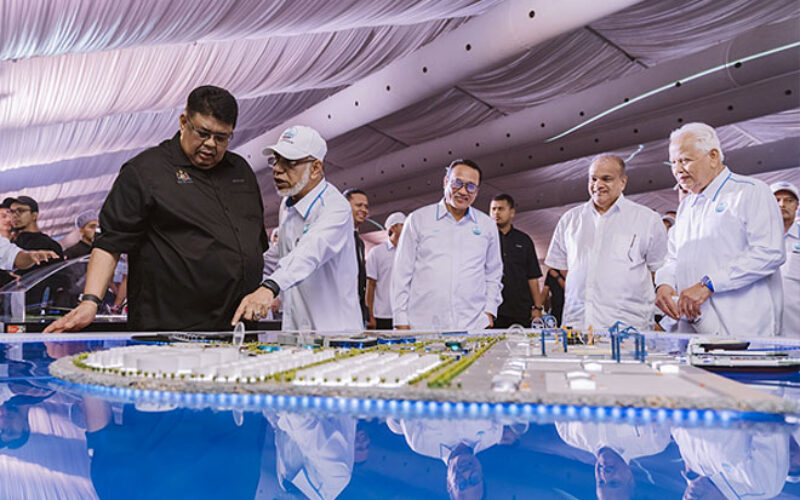
The groundbreaking ceremony, held on 8 February, was performed by YAB Datuk
Seri Utama Ab. Rauf Bin Yusoh, Malacca’s Chief Minister, and attended by
dignitaries, government officials, industry leaders, and stakeholders.
KLIP’s objective is to turn Kuala Sungai Linggi into a Green Global
Industrial Hub for Energy, Port, and Maritime Services, with completion expected
in 42 months.
The development plan calls for the building of tank storage, shipyards,
heavy industrial fabrication yards, hard-standing freight handling areas,
wharves, and warehousing facilities for RM15 billion ($3.14 billion).
KLIP also announced the start of the contract granted to China Harbour
Engineering Co Limited (CHEC) for RM760 million ($125 million). The overall cost
of this project is reportedly RM1.39 billion ($291 million) for the 620-acre
island.
KLIP, as a private port, aspires to raise port facility standards by
embracing cutting-edge technology, environmentally friendly practices, and
effective logistical solutions.
In his keynote address, Tan Sri Datuk Seri Dr Noormustafa Kamal Yahya,
Executive Chairman of KLIP, expressed gratitude for the unwavering support from
the Federal and State Government of Malaysia, local communities, and business
partners.
He emphasized KLIP’s commitment to the highest standards of environmental
conservation initiatives and sustainability, aligning with global efforts to
reduce the carbon footprint of maritime operations.
Tan Sri Noor said: “The groundbreaking ceremony is a historic milestone for
Kuala Linggi International Port – a significant step forward in our mission to
become a world-class maritime hub.
“We are not just building a port; we are constructing a symbol of progress,
collaboration, and innovation in the maritime ecosystem that stimulates economic
development and creates opportunities for future generations.”
The facilities will be constructed to accommodate tank storage for liquid
bulk cargoes, liquefied petroleum gas (LPG), and liquefied natural gas (LNG), as
well as specific sections for ship maintenance, repair, and overhaul.
The port intends to integrate sophisticated technology such as renewable
energy, smart logistics systems, and real-time tracking to improve operating
efficiency and cut turnaround times.
KLIP’s development phase, which is scheduled to be completed by 2027, is
expected to catalyse regional economic growth, trade expansion, and technical
innovation.