
ONE PURCHASES CONTROLLING INTEREST IN THREE CALIFORNIA TERMINALS
Ocean Network Express (ONE) is acquiring a controlling interest in three
container terminals in California as the five-year-old company moves forward
with its investment strategies. Established in 2017 by three Japanese shipping
companies, ONE said the acquisition of the interests in the terminals from its
Japanese parent companies is part of its growth strategy and will safeguard
access to terminal capacity in key and strategic gateways.
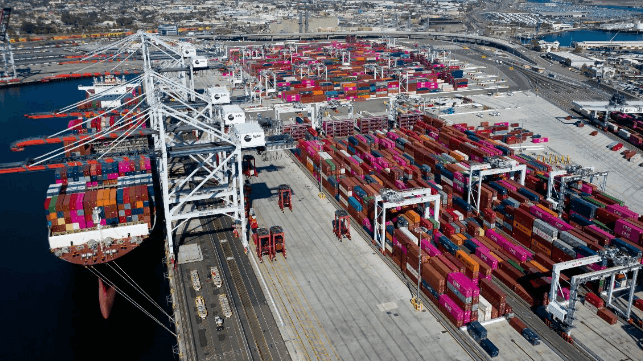
“The recent disruptions to the supply chain due to Covid-19 have
highlighted the importance container terminals play in keeping global trade
flowing,” said ONE. “The newly acquired container terminals will safeguard ONE’s
access to terminal capacity in key and strategic gateways, support its growth
ambitions and enhance its service offerings to customers.”
Under the terms of the definitive agreements reached between ONE and its
parent companies, Mitsui O.S.K. Lines (MOL) and Nippon Yusen Kabushiki Kaisha
(NYK), ONE will acquire a 51 percent stake in both TraPac and Yusen Terminals.
In making the acquisitions ONE joins larger competitors which have also been
expanding their ownership of terminals. In January, CMA CGM completed its
acquisition of the Fenix Marine Services container terminal at the Port of Los
Angeles, one of the largest facilities of its kind in the United States.
The acquisition by ONE is part of the integration of the container shipping
businesses from the parent companies into ONE. The closing of these transactions
is subject to the approval of the relevant authorities.
TraPac was established in 1985 by Mitsui O.S.K. Lines to operate a
container terminal in Los Angeles. Today it also has a terminal in Oakland,
California and it provides vessel stevedore services. Yusen Terminals, which has
been a Port of Los Angeles tenant since 1991, is currently jointly owned by NYK
and Macquarie Infrastructure Partners.
Jeremy Nixon, CEO of ONE, earlier this year mapped out the strategy for the
company noting that they were moving beyond their formative years into a phase
of making independent investment decisions. He outlined an aggressive growth
plan in March 2022 saying they would invest $20 billion by 2030 with up to half
going for investments in terminals.