
PORT OF VANCOUVER BACKS $1 MILLION GREEN TECH TESTING
The Port of Vancouver is testing an array of low– and zero-emission
fuels and technologies to achieve zero emissions by 2050.
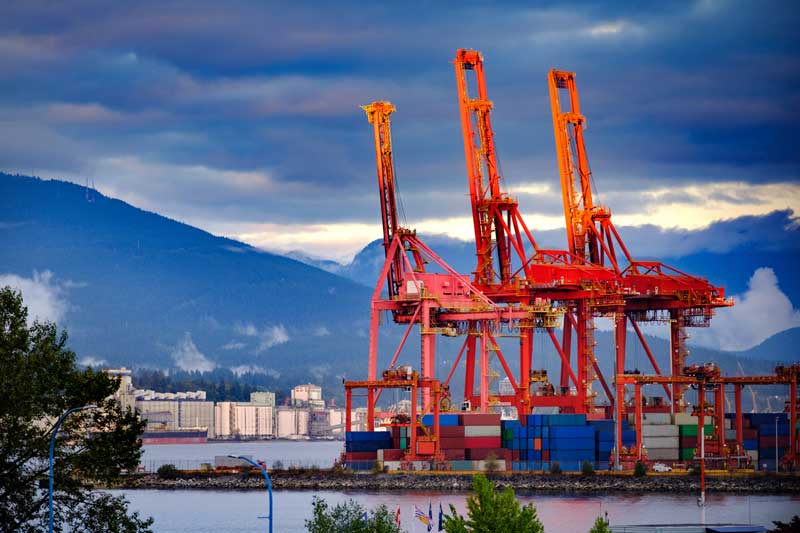
The Vancouver Fraser Port Authority is working together with partners from
across the port community to phase out all port-related emissions.
Through the Low-Emission Technology Initiative, a joint scheme between the
port authority and the Province of British Columbia, the port authority and the
province have each committed CA$1.5 million ($1.1 million) in funding to support
the port community’s transition to low-emission energy.
The initiative includes testing of battery-electric-powered terminal
tractors; 100 per cent biodiesel on commercial ferries; a hydrogen-powered
crane; and 100 per cent renewable diesel on a terminal locomotive and one of the
port authority’s patrol boats.
“Charting our course towards a zero-emission port starts with collaborative
efforts like these – between the port authority, the port community, and
government – to test innovative new low-emission fuels and technologies that
reduce emissions while keeping trade moving through the Port of Vancouver,” said
Robin Silvester, President and Chief Executive Officer of the Vancouver Fraser
Port Authority.
“We plan to continue taking tangible steps, in close collaboration with our
partners across the port, towards our goal of phasing out all port-related
emissions by 2050.”
Efforts to test low-emission fuels include a six-month trial of 100 per
cent renewable diesel on one of the port authority’s patrol boats, the Takaya –
the first federal agency in Canada to do so according to the port authority.
Partners to this initiative include Viterra, DP World, and Seaspan
Ferries.
DP World, which operates four container terminals across British Columbia,
recently installed five zero-emission electric rail-mounted gantry cranes at its
Centerm container terminal on the south shore of Burrard Inlet and additional
shore power technology.
The carrier is also in the final planning stages of retrofitting a hydrogen
fuel cell-powered rubber-tyred gantry (RTG) crane.
Following severe weather events in November 2021, the Port of Vancouver
experienced significant congestion in ocean and rail. PTI spoke to the Vancouver
Fraser Port Authority about possible solutions and the way ahead.